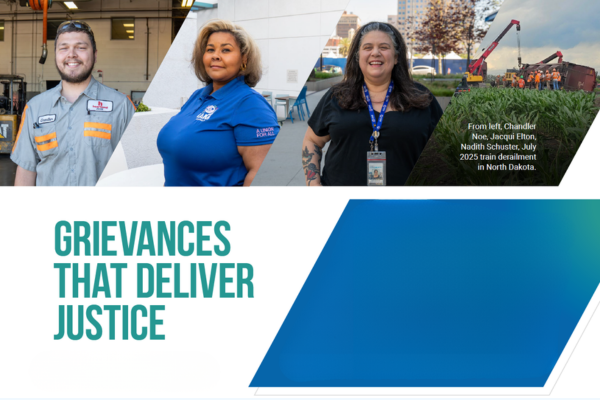



This article was featured in the Summer 2026 IAM Journal and was written by IAM Communications Representative Elías Flamenco Rivera
Desmond King
IKEA – Savannah, Ga.
IAM Local 23 | IAM Southern Territory
Desmond King was terminated in October 2025 under IKEA’s Powered Mobile Handling Equipment (PMHE) point system after management claimed he had accumulated too many points.
For King, the experience was both stressful and uncertain.
“Any time that you’re let go of your job, it’s not an easy thing,” he said.
As a husband and father, losing his job meant more than just losing a paycheck – it meant worrying about how to support his family while waiting for the grievance process to unfold.
From the start, union representatives stood beside him. Shop steward Terry Miller was present on the day King was terminated and immediately began advocating on his behalf.
“The process was very intimidating, but Terry Miller was there fighting for me to keep my job that day,” said King.
Chief Steward Steven Knight and IAM District 243 Business Representative Kahira Black also remained closely involved, guiding King through the months-long process.
“There were times I almost lost hope, and Kahira Black would reel me back in and say, ‘We’re fighting for your best interests,’” King recalls.
District 243 advanced the case through the grievance procedure and prepared it for arbitration, arguing the PMHE policy had not been applied consistently and that the termination failed to meet the “just cause” standard in the contract.
Through persistent advocacy and negotiations, the union secured a no-fault settlement that reinstated King with full seniority and nearly $8,000 in back pay, restoring stability for his family.
“I wouldn’t have my job if it wasn’t for the union … that’s the bottom line,” King said. “Every step of my journey, the union was there for me.”
Now back on the job, King says he plans to continue encouraging coworkers to stand together.
“If this happened to me, it could happen to anybody,” he said. “Without the union, there would be a lot of rights we enjoy today that we wouldn’t have.”
Chandler Noe
Heartland Coca-Cola Bottling – St. Charles, Mo.
IAM District 9 | IAM Midwest Territory
Chandler Noe, who works on tractors and trailers at Coca-Cola’s facility in St. Charles, Mo., filed a grievance after the company denied him holiday pay that had already been approved. Near the end of the year, Noe requested time off to spend the holidays with his family and asked management several times whether he could use one of his remaining sick days after the holiday and still receive holiday pay.
“I asked multiple times… am I allowed to use my sick day after my holiday, and will I get paid for it?” Noe recalls. According to him, management confirmed that it was allowed and approved the request in advance.
When the holidays passed, however, Noe noticed that he had not been paid the holiday pay he was owed. When he questioned management, he said the response was brief and dismissive.
“All they would tell me was one word: ‘no,’” he said.
Instead of letting the issue go, Noe reached out to IAM District 9 Business Representative Roy Collins and filed a grievance.
Noe gathered screenshots and documentation showing that his request had been approved and that he had followed the proper process. During the grievance meeting, an HR representative reviewed the records and confirmed that Noe’s time off had been approved, and the company ultimately agreed to pay him the holiday pay.
For Noe, the experience reinforced the importance of union representation.
“If you continue to let management walk all over you, it’s going to keep happening,” he said. “They think employees will just roll over and take it.”
Noe believes the outcome would have been very different without the union contract and the grievance process supporting him.
“If the contract was not there, the company would have just said ‘no,’ and it would have never gone anywhere,” he said.
By using the grievance process, Noe not only secured the pay he had earned but also showed how the union gives workers the tools and support to stand up for themselves when the employer gets it wrong.
Jacqui Elton
Alaska Airlines – Anchorage, Alaska
IAM Local 601 | IAM Air Transport Territory
Jacqui Elton’s grievance grew out of a difficult period early in her time at Alaska Airlines, when her daughter was diagnosed with cancer just before Jacqui reached one year on the job.
Because she had not yet qualified for family medical leave protections, she suddenly found herself trying to balance her job while spending long stretches in the hospital with her child. Instead of receiving support, Elton remembers receiving a call from a supervisor after about two weeks away.
“He didn’t ask how I was doing or how my daughter was doing,” she said. “He just asked, ‘When are you coming back to work?’”
At a moment when she was already under immense stress, the call made her feel that the employer cared more about staffing than her family’s situation.
The situation escalated when management placed a “record of discussion” in her file, labeling her as aggressive. At the time, Elton had begun serving as a shop steward, and the document referenced her union role during the interaction.
With the help of then IAM Local 601 Chief Steward and now IAM District 142 General Chairman Jesse Wilson, they challenged the discipline through the grievance process.
The union argued that referencing her steward duties in a document that could lead to discipline crossed a line because union representation is protected.
“When we speak with management as a union steward, we are not beneath them – we are equals,” Elton explained. “Putting our steward duties into a disciplinary record goes against the protections we have to stand up for the contract.”
For Elton, the grievance was about more than a single write-up. It was about protecting her job while her family faced one of the hardest moments of their lives. She believes that without the union, the outcome could have been very different.
“Without a union, I would have been fired,” she said. “The IAM had protections in place that kept my job safe even though I didn’t qualify for FMLA at the time.”
That experience strengthened her belief in the union and motivated her to become more involved. Today, Elton serves as Human Rights Chair for IAM Local 601 and as a IAM District 142 Young Workers Coordinator, continuing to advocate for the same protections that once helped protect her and her family.
Nadith Schuster
City of Long Beach – Long Beach, Calif.
IAM Local 1930 | IAM Western Territory
Nadith Schuster’s grievance at the Housing Authority of the City of Long Beach began after management issued what they called a “letter of expectation,” which she argues was effectively a reprimand that threatened her employment.
The write-up followed two incidents: a Teams meeting where Schuster, as a shop steward, raised concerns about assigning new duties to housing specialists without proper training, and mandatory workplace wellness sessions where staff were encouraged to discuss workplace morale and management practices.
Schuster said she made it clear she was speaking from a steward’s perspective and trying to protect workers from being “set up to fail.”
After the meeting, she reached out to management in good faith.
“It’s not my intention to be adversarial,” she said. “I would rather work with management than against management.”
Weeks later, however, she was called into a meeting and read the disciplinary letter without being given a chance to respond beforehand.
Schuster believes she was singled out not for her job performance, but because she spoke up as a union steward.
“They came for me to attack my character,” she said. “I have never in my life been written up. I have never had a bad evaluation. I have never been terminated from a job.”
She says the case relied on incomplete documentation and ignored letters of support from coworkers who witnessed the incidents. For Schuter, the situation highlights why union protection matters, as it gives workers a structure to challenge unfair treatment and hold management accountable.
Even with the frustrations of the process, Schuster says having a union contract, shop stewards, and a formal grievance procedure has allowed her to keep fighting instead of being forced to accept the discipline.
Schuster won her grievance, resulting in the removal of the Letter of Expectation from her file after it was determined to be disciplinary in nature rather than supportive, as such letters are intended to be. The case progressed through multiple steps of the grievance process, with the letter ultimately removed at Step III by Human Resources. However, because a second part of the write-up was not addressed at that stage, Schuster advanced the case to Step IV with the City Manager’s Office, seeking full resolution. In its ruling, the City Manager’s Office advised that she could file a complaint with the City’s EEO office to pursue claims of discriminatory and retaliatory conduct by management toward IAM Shop Stewards. Schuester is now preparing to continue her fight at the state level.
“Now my resolve is even stronger than it was before,” Schuster says. “Now, I’m going to come back harder.”
At the same time, she says the experience reinforced an important lesson for union members: “Know your contract. Know your labor rights. Document everything.”
Even while the case continues, Schuster’s fight has already become an example of how union members can push back when management oversteps.
Baltimore County Public Library Workers
Baltimore, Md.
IAM Local 4538 | IAM Eastern Territory
Fourteen part-time librarians, including IAM Local 4538 bargaining unit members, in Baltimore, Md., were abruptly told their jobs were being eliminated in what management described as a “phase out,” but the union quickly determined the decision violated the contract’s layoff provisions.
Workers were called into an unexpected meeting on Nov. 12, 2025, informed that their positions were ending immediately, and in some cases, escorted out after clearing their desks. For many, the announcement was sudden and devastating, especially coming just before the holidays.
“I was so angry because I had been there for 20 years,” said IAM Local 4538 member Amie Lee. “This just came out of the blue.”
Union leaders immediately filed grievances, arguing that management had failed to follow the contract and had not provided the required notice to the union. Under the agreement, employees facing layoffs were supposed to be placed in equal- or lower-paying positions rather than forced to reapply as if they were brand-new hires.
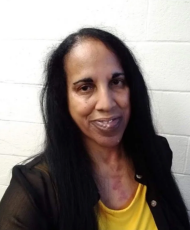
Anita Bass
The union’s fight went beyond restoring the jobs. IAM Local 4538 President Anita Bass took the issue directly to the Baltimore County Public Library Board of Trustees, demanding accountability for how the layoffs were handled and calling for the CEO’s removal – an effort reinforced by a grievance filed by Chief Steward Rachel Jackson.
The fight brought together far more than the original 14 workers. Library workers from across Maryland, labor allies from multiple unions, teachers, former staff, family members, patrons, and community supporters packed the board meeting, creating standing-room-only pressure that the library system could not ignore.
The union also took the fight public, reaching out to county council members, the press, and the broader community as outrage over the decision spread. Within two days, management reversed course and reinstated the workers. The pressure did not stop there. Two weeks later, after workers backed a vote of no confidence and the union kept pressing the board, the CEO was removed.
“It was union power and community outcry,” said Bass.
The victory also energized the Local from within, gaining roughly a dozen new members almost overnight, and added three new stewards, a major boost for a unit that has had to constantly rebuild steward strength across 20 library locations.
“The union has been fantastic the whole way,” said IAM Local 4538 member Lauri Shaw.
The union continued pursuing the grievance even after the reinstatements, eventually winning stronger contract language and improved communication with the board. What began as an abrupt and deeply harmful attempt to eliminate jobs ended as a broader victory by restoring workers, keeping top leadership accountable, building solidarity across the Maryland library system, and leaving the Local stronger than before.
BNSF Railway Workers
Mandan, N.D.
TCU/IAM Local 6440 | Rail Division
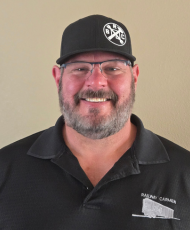
Will Leach
When BNSF contracted out wrecking crew work following a major derailment in July 2025 near Clifford, N.D., TCU/IAM members moved quickly to defend their work and enforce their agreement. Instead of assigning union-represented carmen to perform the work, the company brought in outside contractors, bypassing work that rightfully belonged to TCU/IAM members under the contract. TCU/IAM Local 6440 Chairman Will Leach led the effort, filing a coordinated group of four scope claims on behalf of approximately 130 members. The claims were settled at the first level for $128,000, delivering compensation and reinforcing the importance of holding the company accountable.
Scope grievances – one of the most common types of cases in the Rail Division – are used to enforce contract language that protects union work from being outsourced. Because TCU/IAM Rail Division members fall under the Railway Labor Act, cases can be taken to arbitration without the union bearing the cost, allowing the union to aggressively defend the agreement and members’ craft.
“We have a say in what’s right and what’s safe, and the union stands behind us,” said TCU/IAM Local 6440 member Dave Markel. “Without a union, you don’t have that protection.”
TCU/IAM Local 6440 member Dwight Backman also echoed this sentiment, highlighting that these fights are about more than compensation and about protecting the work itself.
“That’s our work – we have to protect it,” said Backman. “Filing grievances and enforcing the union contract is how we make sure it stays ours.”
From January 2025 through today, TCU/IAM has secured more than $1.46 million for members through grievances and arbitration, demonstrating how filing claims and standing together continue to deliver results on the job.
—
“Beyond the individual victories, these cases highlight something larger: The strength workers gain through IAM representation and a collective bargaining agreement that protects every member,” said IAM Union International President Brian Bryant. “By standing together and using the grievance process, these members held employers accountable and delivered justice on the job.”