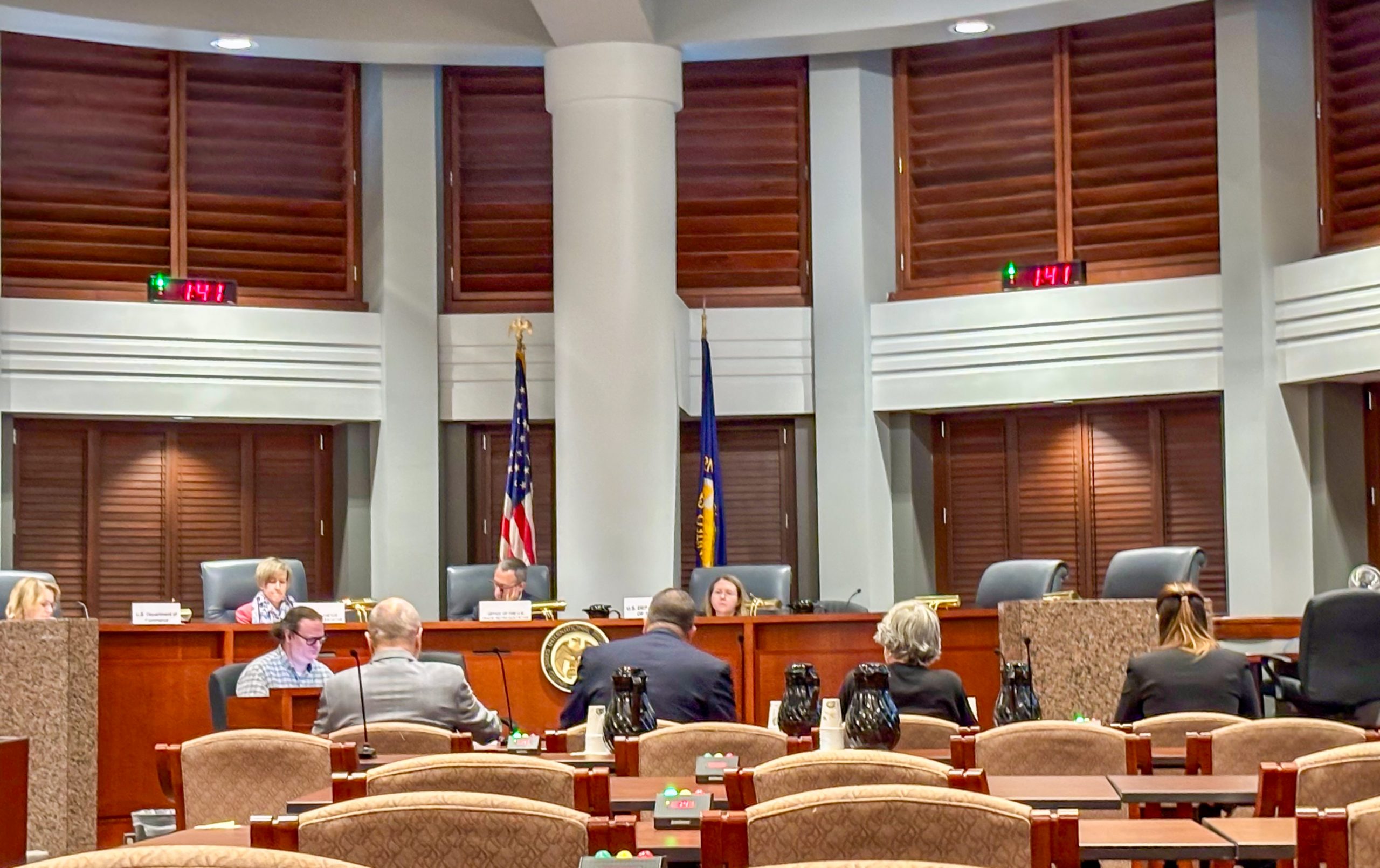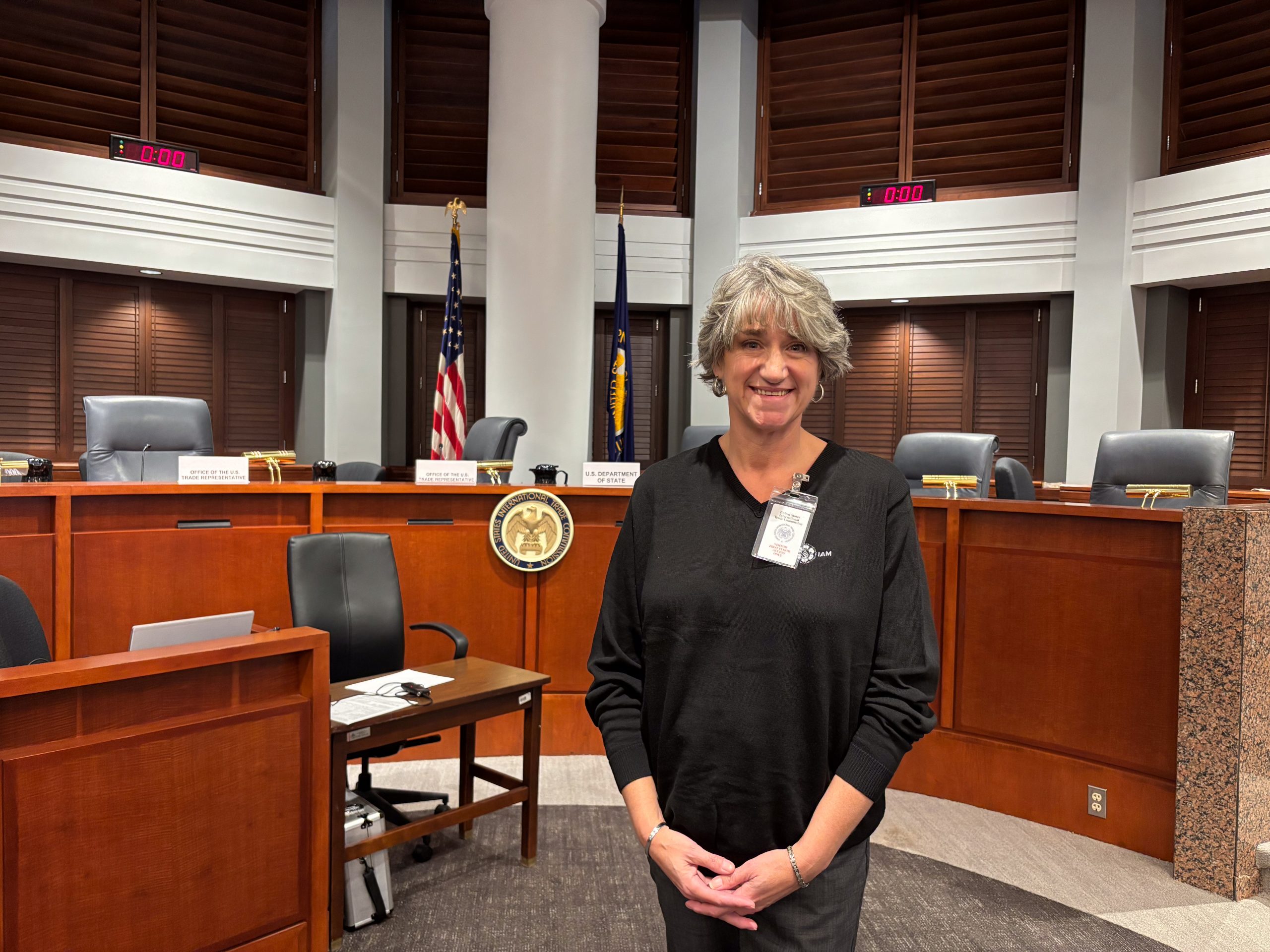


Maine Lobstering Union Local 207 Executive Liaison and Political Director Virginia Olsen delivered powerful testimony before the U.S. Trade Representative, urging federal officials to address long-standing inequities in the U.S.-Mexico-Canada Agreement (USMCA) that disadvantage Maine’s lobstermen and threaten the livelihoods of their coastal communities.
Olsen highlighted the daily challenges created by unequal rules and uneven enforcement. She emphasized that American lobstermen operate under far stricter conservation, gear, and environmental regulations – regulations that fishermen take seriously as part of their commitment to sustaining this vital fishery for generations to come.
These disparities are most visible in the Gray Zone, a 277-square-mile contested area near Machias Seal Island and North Rock in the Gulf of Maine, where Mainers and Canadians fish side by side. Despite sharing the same waters, American fishermen face rigorous enforcement and compliance expectations, while enforcement on the Canadian side remains inconsistent. Canada’s decision in 2002 to allow summer lobster fishing in the contested area has only intensified pressure on the resource and created unnecessary conflict on the water.
Olsen also emphasized the need for stronger Country of Origin Labeling, noting that roughly 80% of Maine-caught lobster is shipped to Canada for processing. Without clear labeling, consumers are left in the dark about where their lobster comes from and which nation’s processors handled it, which undermines the value of Maine’s world-class product.
In her testimony, Olsen called on the U.S. Trade Representative to establish a bilateral committee that brings together fishermen, dealers, processors, scientists, and regulators from both countries to the same table. She stressed that the current Canada–U.S. Steering Committee lacks representation from harvesters and does not reflect the lived experiences of fishermen, who face these challenges firsthand every day on the water.
“Our fishermen uphold some of the strongest conservation standards in the world, but they cannot continue to operate on an uneven playing field,” said Olsen. “To protect this fishery and the communities that depend on it, we need fairness, transparency, and a process that includes the people who know the resource best.”
“For generations, Maine’s lobstermen have cared for this resource and built a world-class fishery through skill, sacrifice, and stewardship,” said IAM Eastern Territory General Vice President David Sullivan. “The USMCA must work for working families, not against them. The IAM Union will continue fighting to ensure our fishermen compete on equal terms and that their livelihoods are protected.”
The Maine Lobstering Union reaffirms its commitment to advocating for policies that protect Maine’s fishing heritage, safeguard the livelihoods of American lobstermen, and ensure that trade agreements do not harm the working families who sustain one of the nation’s most unique industries.
The Maine Lobstering Union (MLU) is a division of the IAM Union (International Association of Machinists and Aerospace Workers) District 4 and the only union-based cooperative in the lobster industry owned and operated by Maine lobstermen. The MLU supports Maine’s lobster community and is committed to the sustainability and safety of Maine’s lobstermen and women and all wildlife that occupy and rely upon the fishery.